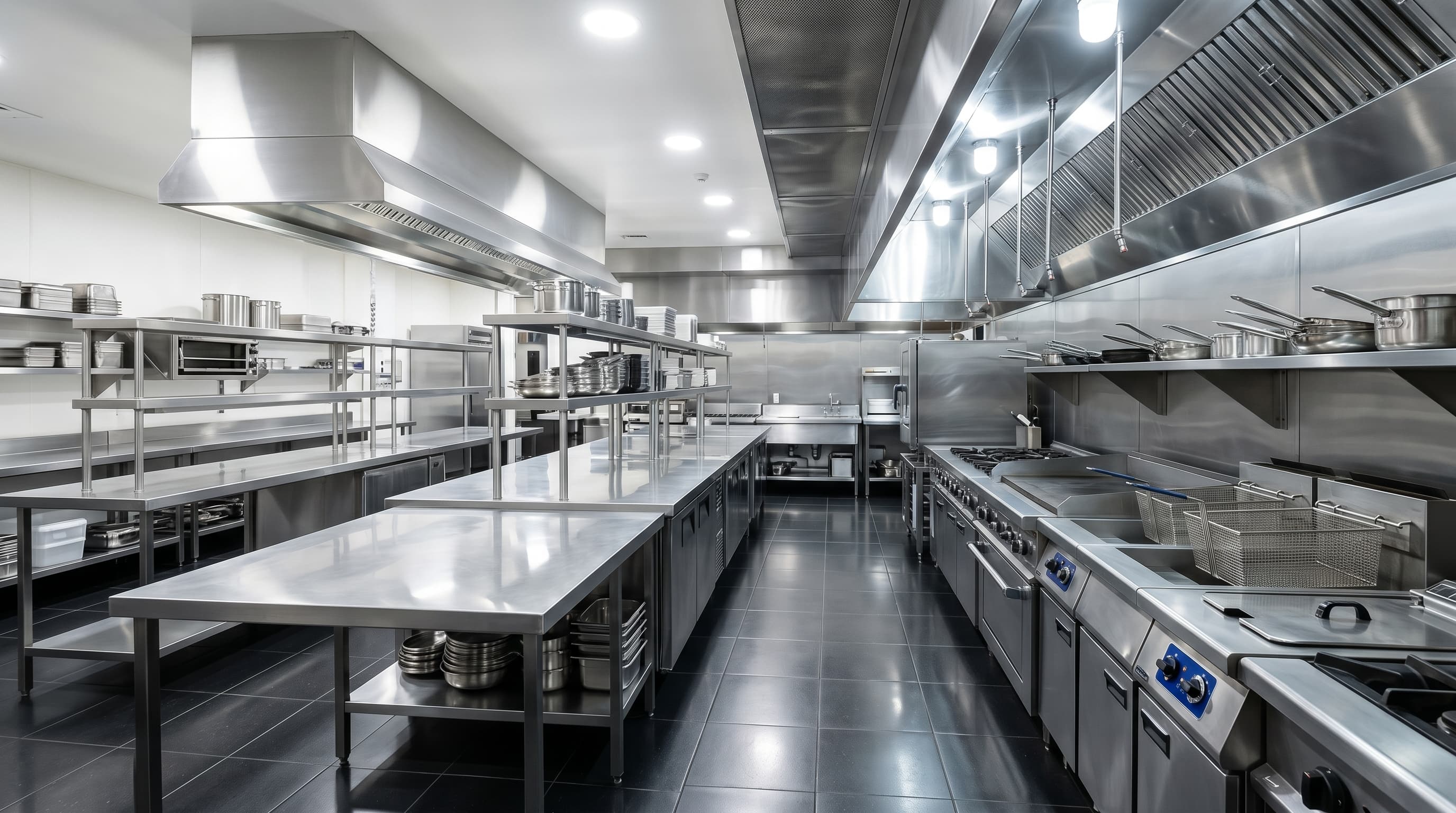
Restaurant Kitchen Cleaning for NJ Health Code Compliance
What NJ restaurant owners need to know about kitchen deep cleaning, health department inspections, and building a cleaning schedule that keeps you compliant.
A health inspector walks into your restaurant on a Tuesday afternoon. No warning. They check the grease trap, run a finger along the underside of the prep table, and pull out the reach-in cooler to inspect the floor behind it. Forty-five minutes later, you either pass or you're staring at a conditional rating and a re-inspection fee.
In New Jersey, the health department doesn't grade on effort. They grade on results. And the gap between "we clean every night" and "this kitchen would survive a surprise inspection" is where most restaurants get caught.
This is the cleaning framework we use for restaurant and commercial kitchen clients across Monmouth County, Ocean County, and Central Jersey. It's built around what NJ health inspectors actually look for, not what most cleaning checklists assume.
What Do NJ Health Inspectors Check During a Restaurant Inspection?
New Jersey health inspections follow the FDA Food Code, enforced locally by county and municipal health departments. Inspectors evaluate food safety practices, but cleaning and sanitation account for a significant portion of every inspection scorecard.
The cleaning-related items we see generate the most violations in NJ restaurants:
- Equipment cleanliness: slicers, mixers, can openers, prep surfaces, reach-in units
- Floor, wall, and ceiling conditions: grease buildup, standing water, damaged surfaces
- Hood and exhaust system: grease accumulation in filters, ductwork, and fans
- Restroom sanitation: soap, towels, functioning fixtures, clean surfaces
- Waste and pest control: overflowing bins, grease trap maintenance, evidence of pests
- Handwashing stations: accessible, stocked, and clean at all times
- Storage areas: dry storage shelving clean, food stored off the floor, no cross-contamination risk
According to NJ Department of Health data, approximately 12% of restaurant inspections in the state result in conditional or unsatisfactory ratings. The most common cleaning-related citations involve equipment surfaces, floor conditions, and inadequate hood maintenance.
How Often Should a Commercial Kitchen Be Deep Cleaned?
Daily surface cleaning is the bare minimum. A full deep clean, covering areas that daily closing crews miss, should happen on a structured schedule.
| Area | Daily | Weekly | Monthly | Quarterly | |------|-------|--------|---------|-----------| | Cooking line surfaces, flat tops, fryers | X | | | | | Floors (sweep and mop) | X | | | | | Prep tables, cutting boards, smallwares | X | | | | | Walk-in cooler/freezer floors | | X | | | | Behind and under cooking equipment | | X | | | | Reach-in cooler interiors and gaskets | | X | | | | Walls and backsplash behind cooking line | | X | | | | Floor drains (full cleanout) | | X | | | | Hood filters (soak and degrease) | | X | | | | Dry storage shelving and organization | | | X | | | Ceiling tiles and vent covers | | | X | | | Walk-in cooler/freezer walls and shelving | | | X | | | Grease trap pumping | | | X | | | Full hood and duct system cleaning | | | | X | | Floor machine scrub (tile and quarry) | | | X | | | Light fixtures and signage | | | X | |
The quarterly hood and duct cleaning is the one most restaurants outsource and the one most likely to cause a fire if skipped. NFPA 96 requires hood systems in high-volume cooking operations to be professionally cleaned every 90 days. Grease buildup in ductwork is the leading cause of commercial kitchen fires in the United States, accounting for roughly 8,000 fires annually per NFPA data.
What's the Difference Between Nightly Cleaning and a Professional Deep Clean?
Nightly closing crews handle the visible work: wipe down stations, sweep and mop floors, clean the flat top, empty trash, and sanitize prep surfaces. That's operational cleaning. It keeps the kitchen functional for the next shift.
A professional deep clean reaches everything nightly crews don't have time or equipment to address:
- Pull all equipment from walls and clean behind and underneath. Grease, food debris, and moisture accumulate in these dead zones and attract pests. Most NJ restaurants have 6 to 12 pieces of line equipment that need to be pulled, cleaned behind, and pushed back.
- Degrease walls, backsplashes, and ceiling areas above the cooking line. Airborne grease coats these surfaces within days of the last deep clean. It's invisible until it's thick enough to drip.
- Scrub floor tile grout lines. Quarry tile and grout in commercial kitchens absorb grease and turn dark fast. Mop water alone won't restore them. Rotary scrubbing with alkaline degreaser is the only way to get grout lines back to a passable condition.
- Clean and sanitize all cooler and freezer interiors. Pull shelving, scrub walls, clean gaskets, and check for ice buildup or condensation issues. Mold grows fast in reach-in units with damaged gaskets.
- Detail clean all smallwares storage and dry goods areas. Remove everything from shelves, wipe down surfaces, reorganize. Inspectors open these areas every time.
The cost difference reflects the scope. Nightly closing labor for a mid-size restaurant kitchen in NJ runs $150 to $300 per night depending on staff rates. A professional monthly deep clean for the same kitchen typically costs $800 to $1,500, and quarterly hood cleaning adds $350 to $800 per service.
Which Kitchen Areas Cause the Most Health Code Violations?
Three areas account for the majority of cleaning-related violations in NJ restaurant inspections.
Under and behind equipment. Inspectors pull equipment away from walls. They do it every time. If the floor behind your fryer has a quarter-inch of grease buildup and decomposing food debris, that's an immediate violation. This is the single most common "gotcha" in NJ kitchen inspections.
Hood and exhaust systems. Grease-loaded hood filters, dirty fan blades, and greasy ductwork are fire hazards and sanitation violations simultaneously. Inspectors check filter condition and look for grease dripping from the hood canopy. If your filters are discolored and sticky, expect a citation.
Floor drains. Clogged or slow floor drains create standing water, which is both a slip hazard and a sanitation violation. Biofilm buildup in drain lines also produces odors that travel through the kitchen. Weekly drain cleaning with enzymatic cleaner prevents the slow buildup that leads to complete blockages.
How Should NJ Restaurants Prepare for a Health Inspection?
You can't predict when the inspector will arrive. The preparation is the system itself. If your cleaning program runs consistently, you don't need to scramble.
Build your inspection readiness around these five practices:
- Post cleaning checklists at every station. Daily, weekly, and monthly tasks should be written down and initialed by the crew member who completed them. Inspectors look for documentation.
- Schedule monthly walk-throughs. Walk your kitchen the way an inspector would. Check behind equipment, open every cooler, inspect the hood, look at the ceiling. Fix issues before they become violations.
- Keep a cleaning log. Record deep cleaning dates, hood cleaning service receipts, and grease trap pumping records. NJ inspectors may ask for proof of maintenance on hood systems and grease traps.
- Train every employee on sanitation basics. Handwashing protocol, surface sanitizer concentration, and food storage rules should be part of onboarding for every kitchen position. Not just the kitchen manager.
- Partner with a professional cleaning team for deep cleans. Your closing crew handles daily maintenance. A commercial cleaning company handles the monthly and quarterly deep work that keeps you ahead of inspections. This is especially critical for the tasks that require specialized equipment, like floor stripping on quarry tile or pressure washing exterior dumpster pads and loading areas.
Does Outsourcing Kitchen Cleaning Actually Save Money?
For most NJ restaurants, yes. The math works like this:
Training and retaining back-of-house staff to perform deep cleaning at a professional level is expensive and unreliable. Line cooks and dishwashers aren't equipped to pull apart hood systems, operate floor machines, or degrease ductwork safely.
The alternative is paying overtime to your existing staff for deep cleaning shifts, which typically costs more per hour than a contracted cleaning crew and produces inconsistent results. A restaurant paying three employees $20/hour for a 5-hour deep clean is spending $300 in labor alone, without the specialized equipment or chemicals that a professional crew brings.
A contracted monthly deep clean at $800 to $1,500 replaces that labor, includes professional-grade equipment and degreasers, and comes with accountability. If the work isn't right, the cleaning company fixes it. You don't get that with your own staff.
The cost of a failed inspection makes the comparison even clearer. Re-inspection fees, potential temporary closure, and reputation damage from a publicly posted conditional rating far exceed the cost of a consistent professional cleaning program. In Monmouth and Ocean County, restaurant ratings are public record and increasingly visible online.
Get Your Kitchen Inspection-Ready
C&S Commercial Cleaning provides restaurant and commercial kitchen cleaning for food service operations across New Jersey, from independent restaurants in Toms River and Brick to multi-location operations in Freehold and across the Shore region.
We build kitchen cleaning programs around your service schedule so deep cleans happen during off-hours, never during service. Monthly deep cleans, quarterly hood service coordination, and ongoing daily, weekly, and monthly maintenance are all on the table.
Call (908) 894-3871 for a free kitchen cleaning estimate and we'll walk your kitchen within 48 hours.
Need a Professional Opinion?
Get a complimentary onsite assessment of your commercial space in New Jersey.
Request Consultation